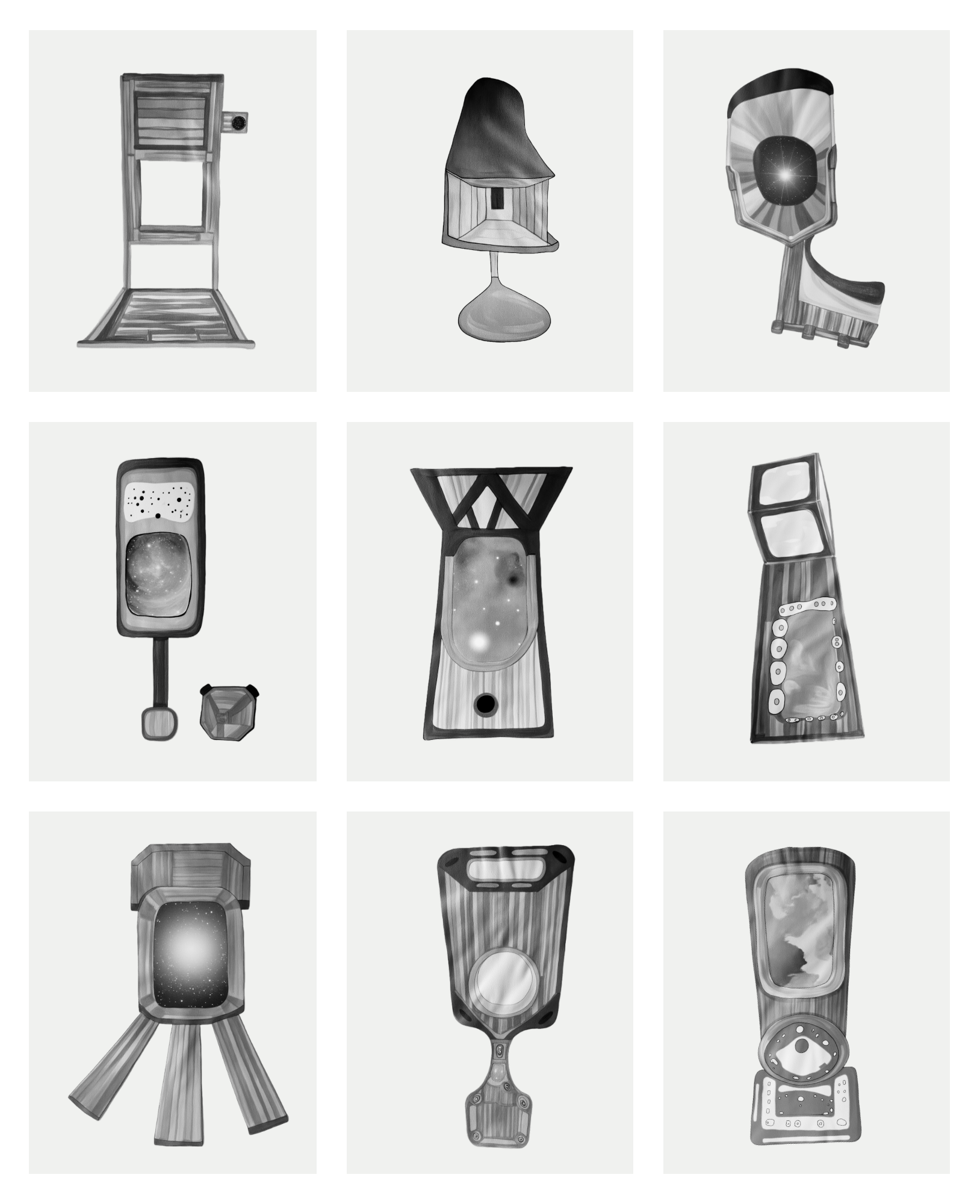
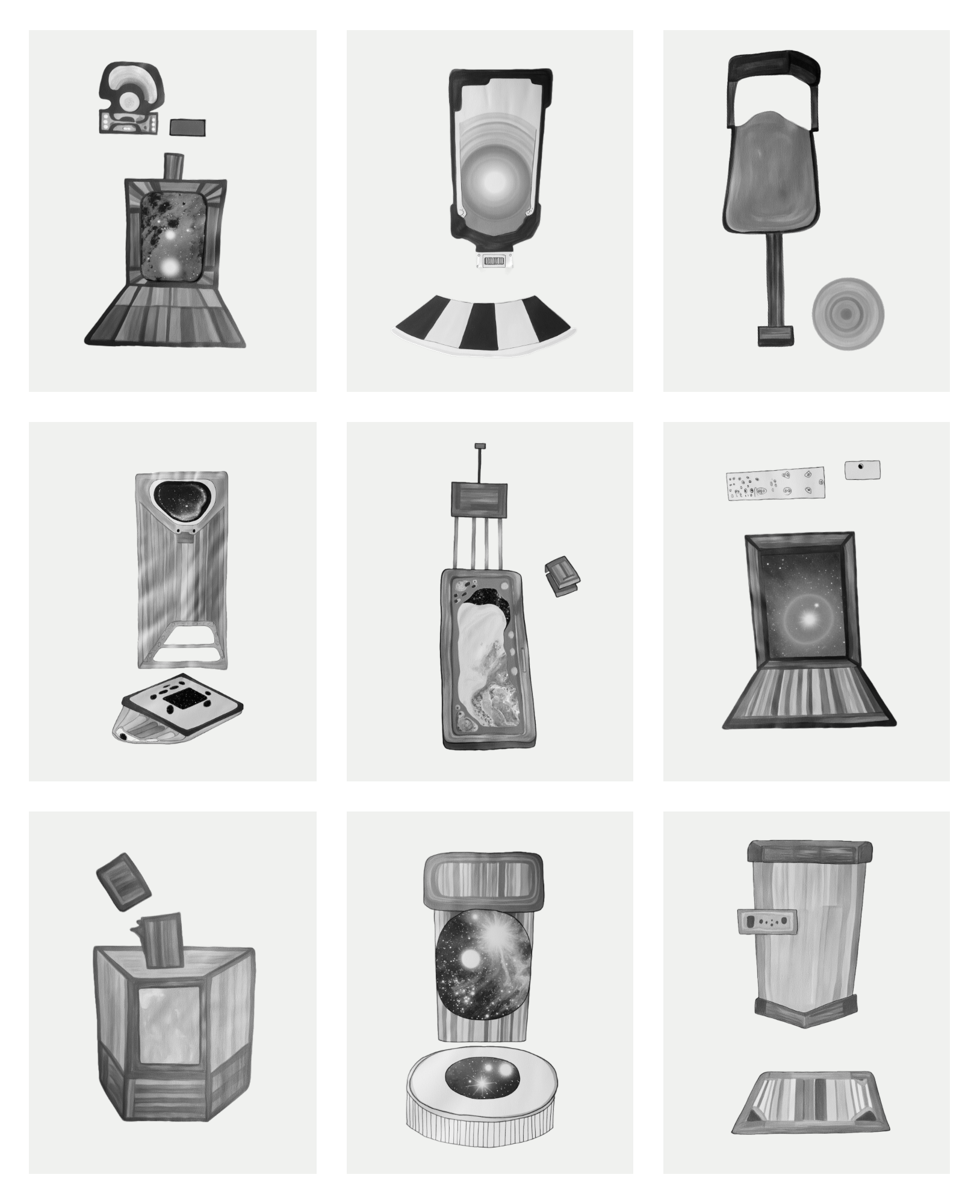
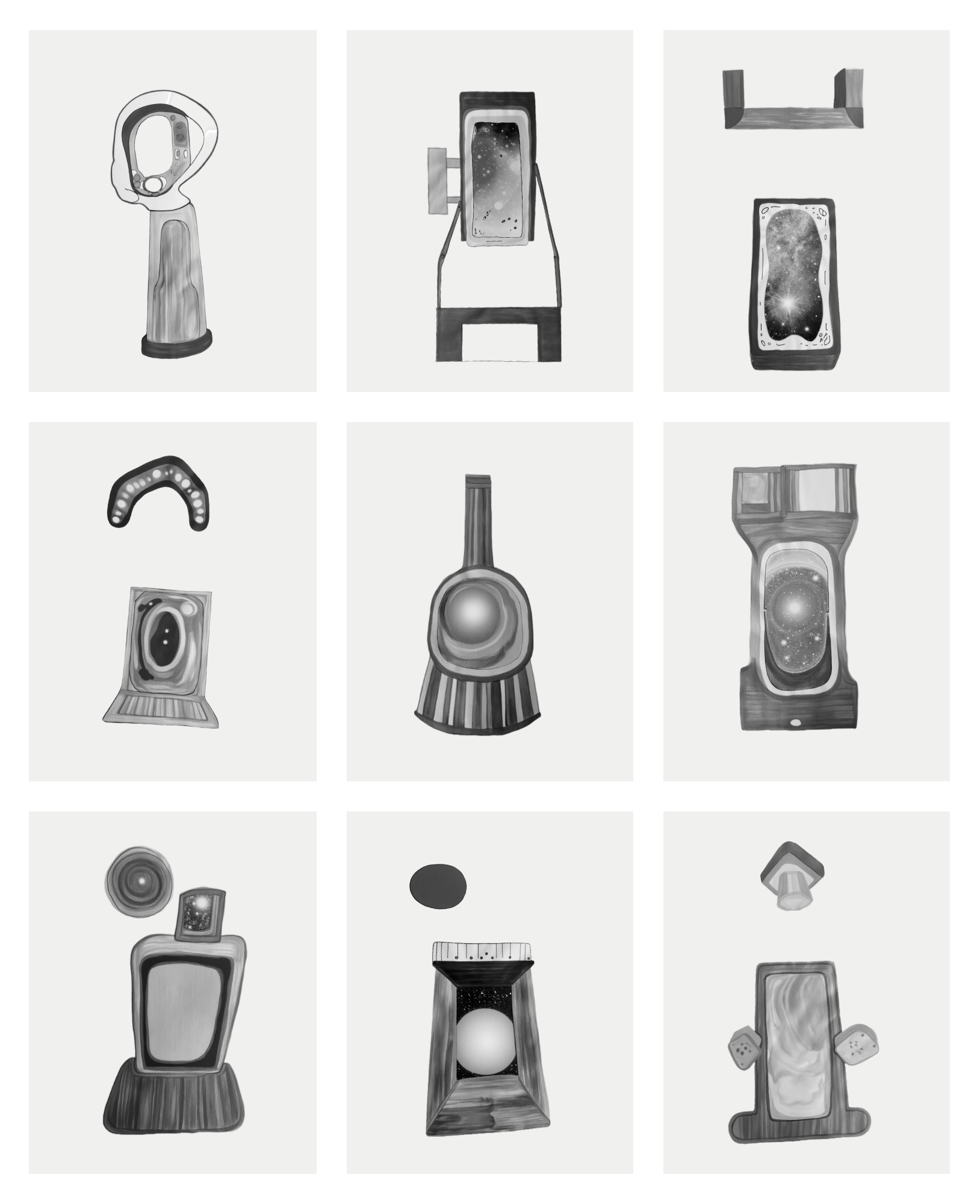
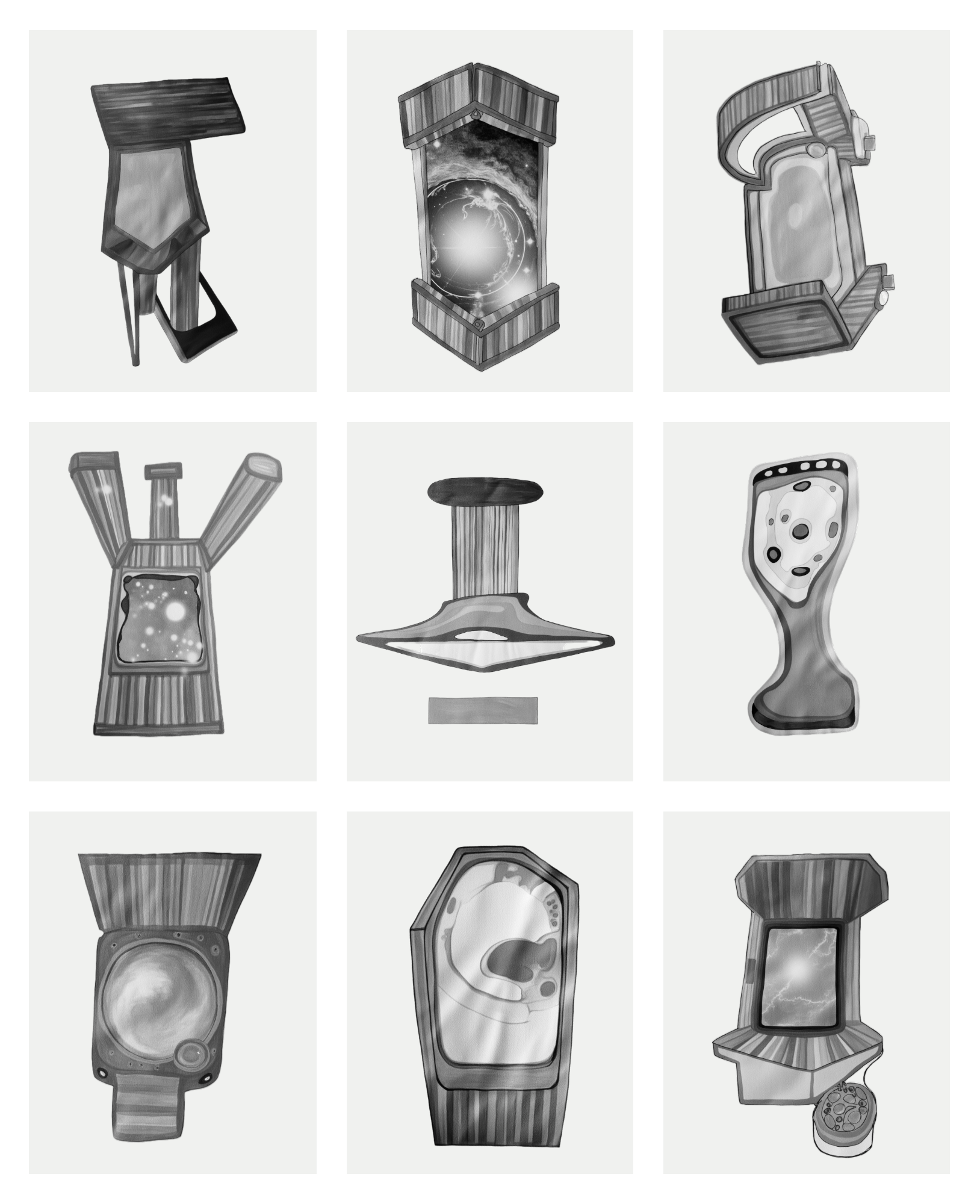
Imaginary Sculptures (2026)
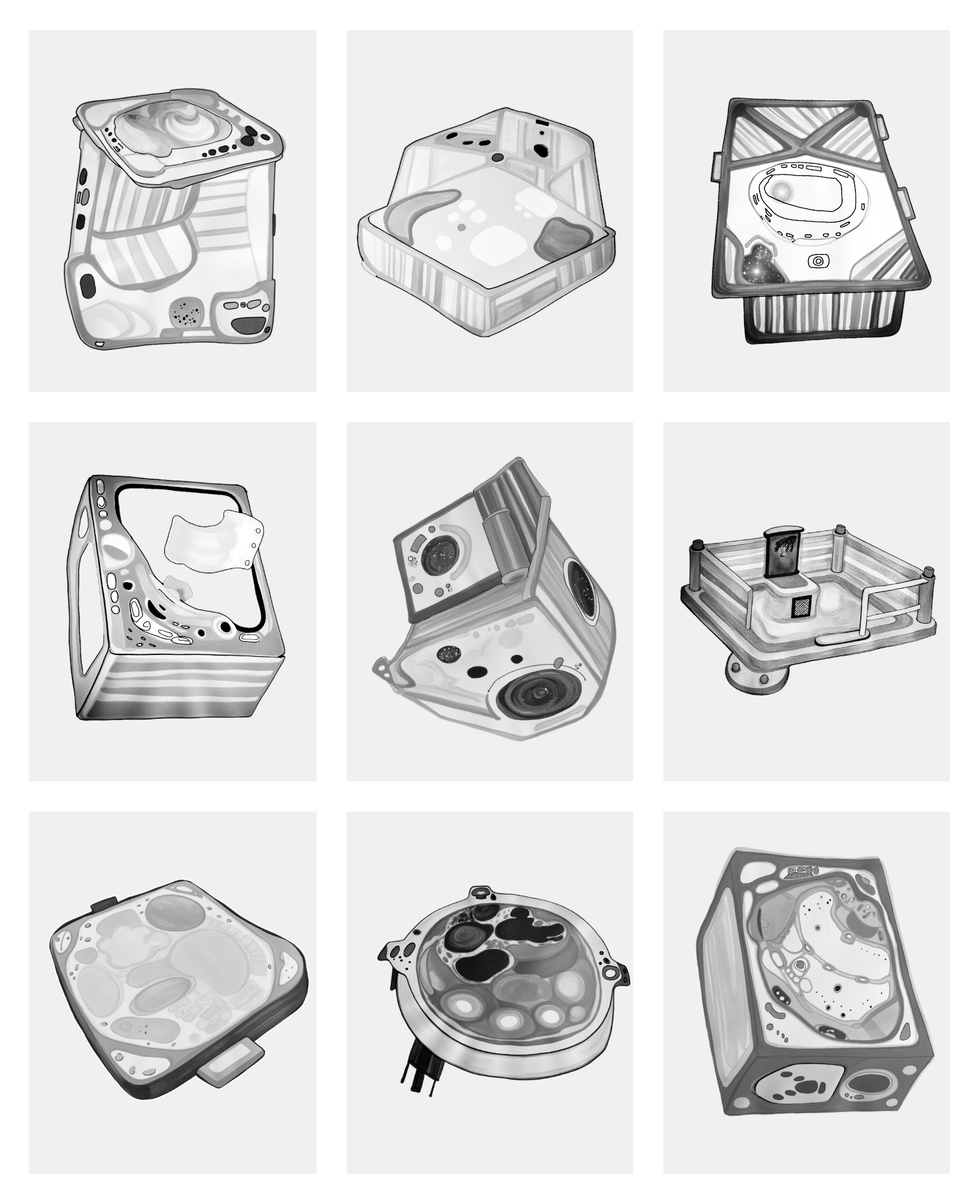
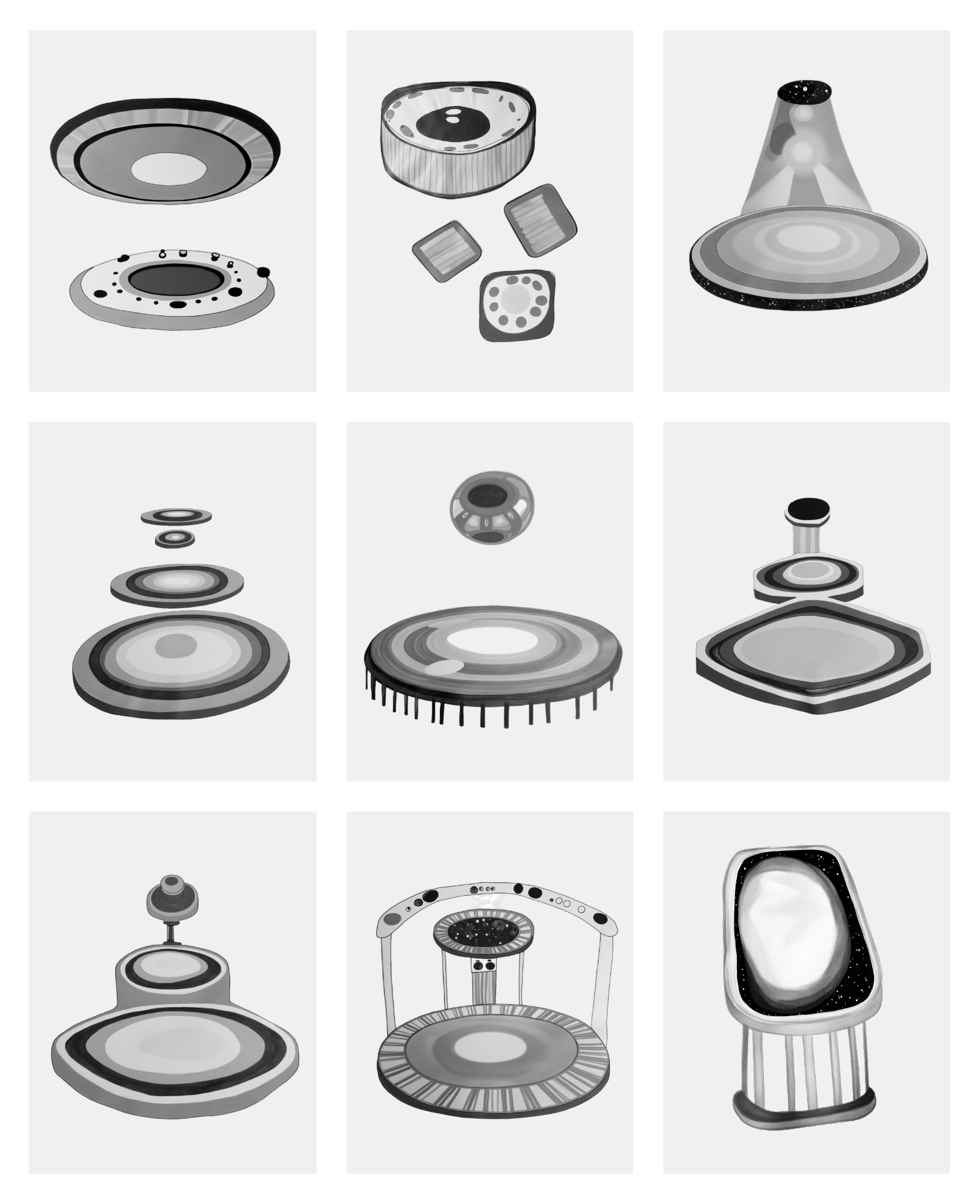
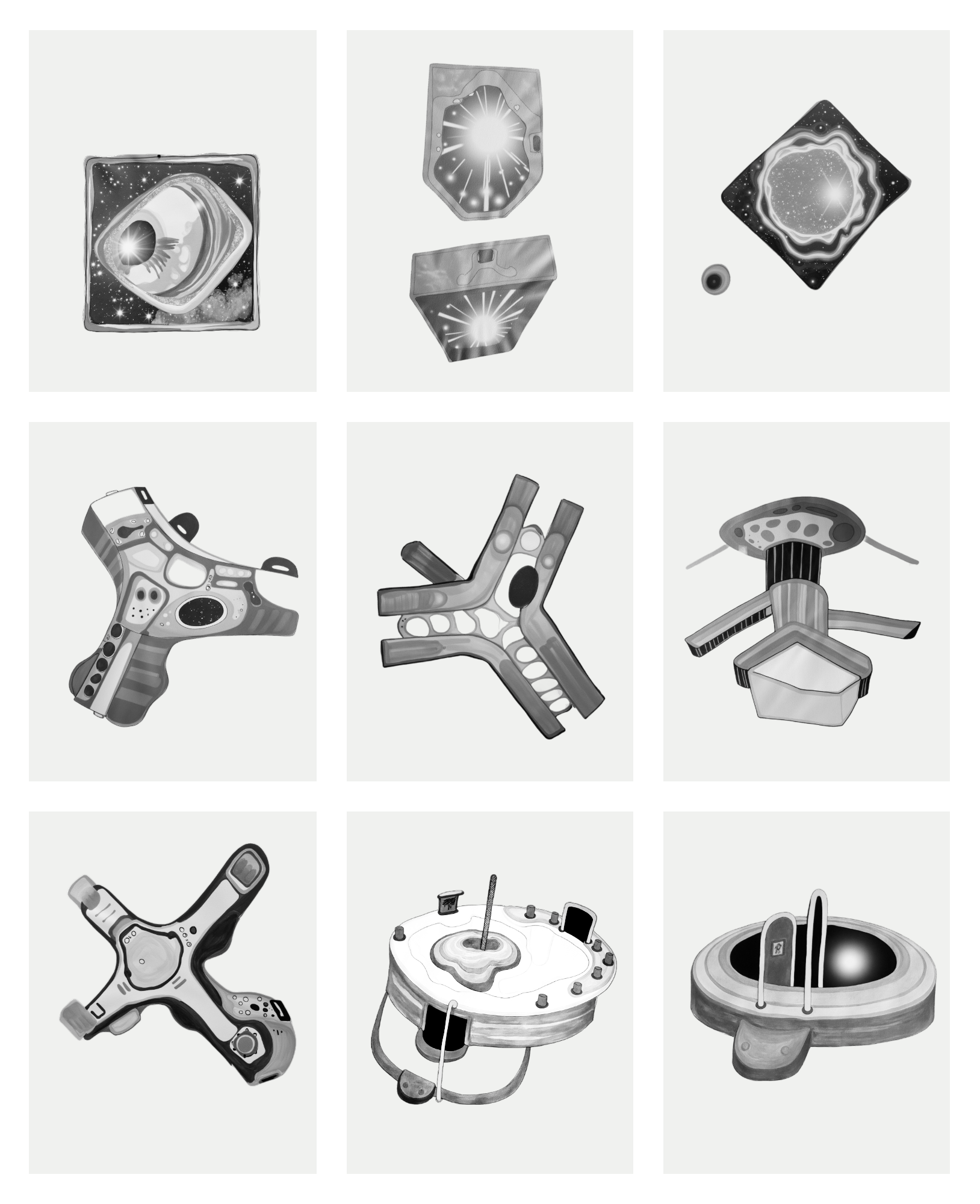
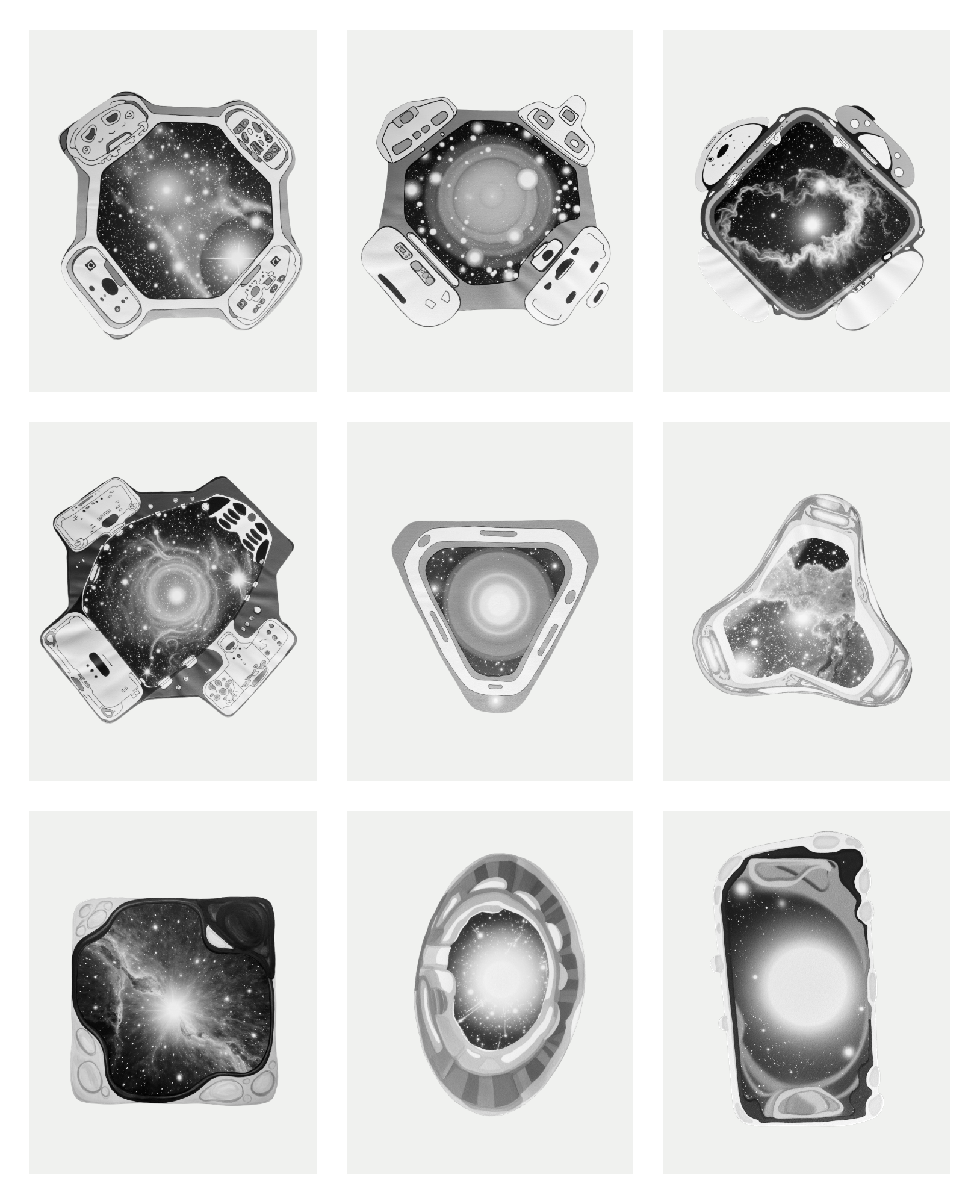
In Imaginary Sculptures is a contemporary take on the Anonymous Sculptures of Bernd and Hilla Becher, sharing with them a typological and serial logic in which a repeated class of object is understood through formal variation across images. But the resemblance is also the point of departure. The Bechers photographed real industrial structures, embodied infrastructures of postwar modernity shaped by labor, engineering, and the material history of industrialization in Germany. In contrast, the objects in Imaginary Sculptures have been produced in the latent space of AI. The iterative use of a custom Flux LoRA and text-to-image generation produces a series of imaginary objects that evoke technological interfaces and consumer forms—consoles, remote controls, exercise equipment, hot tubs, mall architecture, outdoor furniture, and airplane windows—while reconstituting them as unstable synthetic images that hover between familiarity and dislocation. If the Bechers worked at the end point of one industrial regime, documenting its disappearing physical forms, this project works inside the idea that AI as a contemporary industrial framework for producing images, categories, and information emerges from traversing a probabilistic field in which strange leisure objects and related forms continually appear and mutate.